
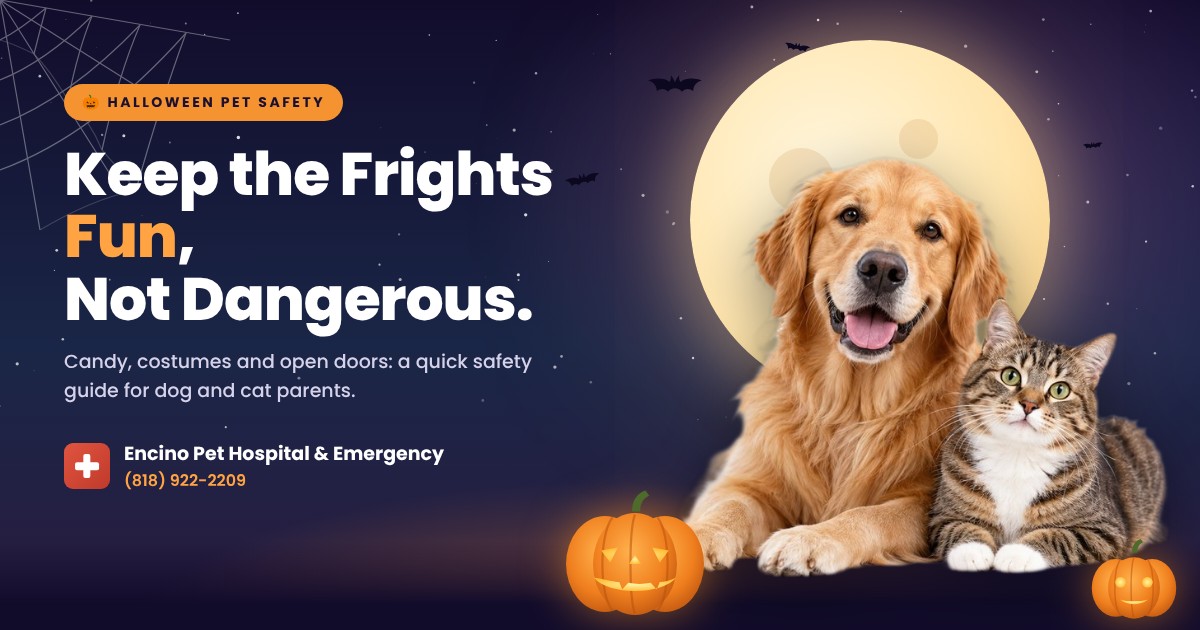
Halloween Pet Safety: Keep the Frights Fun, Not Dangerous!
A Halloween safety guide from Encino Pet Hospital & Emergency for dog and cat parents.
Halloween is a time for costumes, candy, decorations, and spooky celebrations! But while we enjoy the festivities, Halloween can present unexpected dangers to our furry family members.
At Encino Pet Hospital & Emergency, we want to help you keep your dogs and cats safe, comfortable, and healthy throughout the Halloween season. Here are some important Halloween safety tips every pet parent should know.
Beware of Halloween Candy: A Sweet Treat Can Become an Emergency!
Halloween candy is one of the most common holiday hazards for pets.
Chocolate toxicity
Chocolate contains theobromine and caffeine, which can be toxic to dogs and cats. Dark chocolate and baking chocolate are particularly dangerous.
Signs of chocolate toxicity may include:
- Vomiting and diarrhea
- Restlessness and hyperactivity
- Increased heart rate
- Tremors and seizures
Severe cases may lead to life-threatening complications.
Sugar-free candy and xylitol
Some sugar-free candies and chewing gums contain xylitol, also called birch sugar, which is extremely toxic to dogs. Even small amounts can cause dangerously low blood sugar, seizures, and potentially severe liver injury.
Important: If your dog eats chocolate or a product containing xylitol, contact a veterinarian immediately. Do not wait for symptoms to develop. Call us at (818) 922-2209.
Candy wrappers
Candy wrappers, plastic packaging, and foil can cause choking or gastrointestinal obstruction if swallowed.
Safety Tip: Keep all Halloween candy in securely closed containers, away from curious pets.
Halloween Costumes: Cute Should Never Mean Uncomfortable!
We love seeing pets dressed up for Halloween! However, not every pet enjoys wearing a costume. Before dressing up your pet, make sure the costume:
- Does not restrict breathing, movement, or vision.
- Does not contain small pieces that could be chewed off or swallowed.
- Does not cause overheating or skin irritation.
- Allows your pet to walk, sit, and behave normally.
- Does not cause fear, anxiety, or distress.
Watch for signs of discomfort, including excessive panting, freezing in place, attempts to remove the costume, or unusual behavior.
Our Recommendation: If your pet dislikes costumes, consider a festive bandana or Halloween-themed collar instead.
Trick-or-Treaters and Open Doors: Prevent Escapes!
Halloween night brings frequent doorbell ringing, unfamiliar visitors, loud noises, and open doors. These activities can frighten even the friendliest pets.
How to prevent accidental escapes
- Keep pets in a quiet, secure room during trick-or-treating.
- Make sure your pet wears a collar with updated identification.
- Verify that your pet’s microchip information is current.
- Consider playing calming music to reduce outside noise.
- Avoid allowing pets to greet every visitor at the door.
Did You Know? A frightened pet may run away even if they have never attempted to escape before.
Taking a few simple precautions can help prevent a stressful Halloween emergency.
Halloween Decorations: Hidden Hazards Around the House
Spooky decorations can create unexpected dangers for curious pets.
Pets can accidentally knock over lit candles, causing burns or house fires. Use battery-operated candles whenever possible.
Biting into glow sticks can cause significant oral irritation, drooling, and discomfort.
Chewing decorative light cords can cause electrical burns or electrocution.
Artificial cobwebs, strings, ribbons, and small decorative objects can cause choking or gastrointestinal obstruction if swallowed.
Safety Tip: Keep decorations out of reach, particularly if your pet likes chewing unfamiliar objects.
Keep Cats Safe During Halloween
Halloween can be particularly stressful for cats because of unfamiliar sounds, visitors, and changes in their environment.
- We recommend keeping cats indoors during Halloween festivities, especially after dark.
- Provide a quiet hiding area with access to fresh water, food, and a litter box.
- Make sure windows and doors are secured.
Black cats deserve the same protection and care as every other cat. Keeping all cats safely indoors helps reduce the risk of traffic accidents, escape, and other outdoor hazards.
Halloween Anxiety: Recognize the Signs of Stress
Halloween celebrations can trigger anxiety in both dogs and cats. Common signs include:
- Trembling or shaking
- Excessive barking or vocalization
- Hiding or attempting to escape
- Pacing and restlessness
- Excessive panting
- Destructive behavior
- Reduced appetite
What can you do?
- Create a quiet, comfortable environment away from the excitement.
- Provide familiar bedding, toys, and a safe resting area.
- Avoid forcing your pet to interact with strangers or participate in activities that make them uncomfortable.
If your pet has a history of severe anxiety, speak with your veterinarian before Halloween about possible behavioral strategies or medications.
Halloween Treats: Choose Pet-Safe Alternatives
Want your pet to participate in Halloween without the risks? Consider offering:
- Veterinary-approved dog or cat treats
- Small portions of plain, cooked pumpkin without added sugar or spices
- Interactive toys or treat puzzles
- A special pet-friendly Halloween snack
Avoid sharing chocolate, candy, raisins, grapes, or other potentially toxic human foods. Remember that even pet-safe treats should be given in moderation.
When Is It a Veterinary Emergency?
Some Halloween accidents require immediate veterinary attention. Seek emergency veterinary care if your pet:
- Eats chocolate, xylitol, raisins, grapes or another potentially toxic substance.
- Experiences repeated vomiting or severe diarrhea.
- Develops tremors, seizures, collapse, or unusual weakness.
- Has difficulty breathing.
- Swallows a foreign object or potentially dangerous decoration.
- Sustains burns or electrical injuries.
- Shows sudden, severe behavioral changes or signs of significant distress.
Do not attempt to induce vomiting or administer home remedies without veterinary guidance. Early veterinary intervention can significantly improve outcomes in many emergencies.
Worried right now? Call (818) 922-2209 or see our emergency and urgent care page.
🧡 Your Pet’s Safety Is Our Priority!
At Encino Pet Hospital & Emergency, we believe prevention is the best way to protect your furry family members. A little preparation can help ensure that Halloween remains a fun and memorable celebration for everyone, including your pets!
Whether you have questions about Halloween safety, accidental ingestion, or unusual symptoms, our veterinary team is here to help.
🎃 Wishing You and Your Pets a Safe and Happy Halloween!
Encino Pet Hospital & Emergency. Compassionate Veterinary Care When Your Pet Needs It Most.
Frequently Asked Questions
Can dogs eat pumpkin?
Yes! Plain, cooked pumpkin without added sugar or spices is generally safe for dogs in small quantities. Avoid pumpkin pie filling, which may contain ingredients harmful to pets.
What should I do if my dog eats Halloween chocolate?
Contact a veterinarian or animal poison control service immediately. The risk depends on the type and amount of chocolate consumed and your dog’s body weight. Do not wait for symptoms. Call us at (818) 922-2209.
Are Halloween costumes safe for cats?
Some cats tolerate costumes, but many find them stressful. If your cat shows signs of discomfort, remove the costume and consider a festive collar instead.
Can Halloween decorations cause intestinal blockages?
Yes. Strings, ribbons, fake spiderwebs, plastic decorations, and candy wrappers can cause gastrointestinal obstruction if swallowed.
Should I give my anxious dog medication before Halloween?
If your dog has a history of significant anxiety, consult your veterinarian before Halloween. Your veterinarian can recommend an appropriate plan based on your pet’s medical history and individual needs.
Halloween mishap? Call us first.
Open 7 days a week, 7:30 AM to 7:30 PM, on Ventura Blvd in Encino. One call and our team will be ready when you arrive.