
Questions to Ask Your Veterinarian Before Pet Surgery
Before your pet’s surgery, ask why it is needed and what alternatives exist, who will operate, which pre-surgical tests are required, how anesthesia will be monitored, how pain will be managed, what the written estimate includes, what recovery involves and who to call about complications. Bring this list to your surgical consultation in Encino.
Key takeaways
- Start with the goal: what the operation fixes and what happens without it.
- Ask for an individualized anesthesia plan and how vital signs are monitored.
- Get a written estimate that covers testing, anesthesia, medication and follow-up.
- Leave with written discharge instructions and an after-hours contact plan.
Before pet surgery, ask why it is needed, what alternatives exist, and how anesthesia, pain, and recovery will be managed. You should also understand the costs, possible complications, and follow-up plan. These answers help you make an informed decision and prepare for care at home.
Hearing that your dog or cat needs an operation can feel worrying. You may struggle to remember your questions during the appointment.
Writing them down beforehand makes the discussion easier. Start with the reason for surgery, then work through preparation, safety, and recovery.
Why Does My Pet Need Surgery?
Ask your veterinarian to explain the diagnosis in plain language. What problem will the operation address? What could happen without treatment?
The answer should connect the procedure with a clear goal. That goal might involve easing pain, removing a blockage, or collecting tissue for testing.
When discussing pet surgery in Encino, ask which findings support the recommendation. These might include examination results, imaging, or laboratory tests.
Also ask whether the diagnosis is confirmed or still uncertain. Some operations help identify a problem while treating it.
Understanding that difference helps you set realistic expectations before giving consent.
Are There Other Treatment Options?
Surgery may be the recommended choice, but asking about alternatives remains useful. Could medication, monitoring, or another treatment help?
Ask how each option compares in terms of comfort, recovery, and likely results. A less invasive option may have limits.
You should also discuss timing. Some procedures can be planned, while others need a faster response.
Ask what could change if you wait. Would a delay increase pain, make treatment harder, or reduce available options?
Before leaving, make sure you understand the next step. That might involve scheduling surgery, arranging further tests, or seeking another opinion.
Who Will Perform the Surgery?
Ask who will operate and how often they perform that procedure. Experience with your pet’s specific condition matters.
Also clarify who handles anesthesia and monitors recovery. Knowing each person’s role can make the process easier to understand.
Dr. Ashkan Farahany, DVM, serves as medical director at Encino Pet Hospital & Emergency. He graduated in 2017 and has experience in emergency care and routine soft-tissue surgery.
For a complex procedure, ask whether specialist involvement would be useful. Confirm whether treatment happens on-site or requires referral.
A surgical consultation should explain those arrangements clearly. General experience does not replace discussing the requirements of your pet’s operation.
Which Tests Are Needed Before Surgery?
Ask which tests your pet needs and how the results could affect treatment. Testing should answer specific questions about their health.
AAHA’s anesthesia guidance supports a patient assessment and an individual plan before anesthesia. It also addresses stabilizing health problems beforehand.
Bring information that helps your veterinarian in Encino understand your pet’s history:
- Current medications, supplements, and doses.
- Previous illnesses, operations, or reactions to anesthesia.
- Recent changes in eating, drinking, breathing, or activity.
- Records and test results from other veterinary clinics.
Laboratory testing, digital X-rays, and ultrasound can support assessment before surgery. Ask which tests your pet needs.
Also ask whether any samples require outside testing. Knowing when results arrive helps you understand the schedule.
How Will Anesthesia Be Managed?
Ask how the anesthesia plan accounts for your pet’s health and procedure. Avoid expecting the same plan for every patient.
AAHA describes anesthesia as a process covering preparation, induction, maintenance, and recovery. Its guidance emphasizes individual planning and continuous monitoring.
Useful questions include who monitors your pet and what they measure. Ask how breathing, blood pressure, and temperature are checked.
You can also ask how the team responds if those readings change. Equipment matters, alongside trained staff who interpret results.
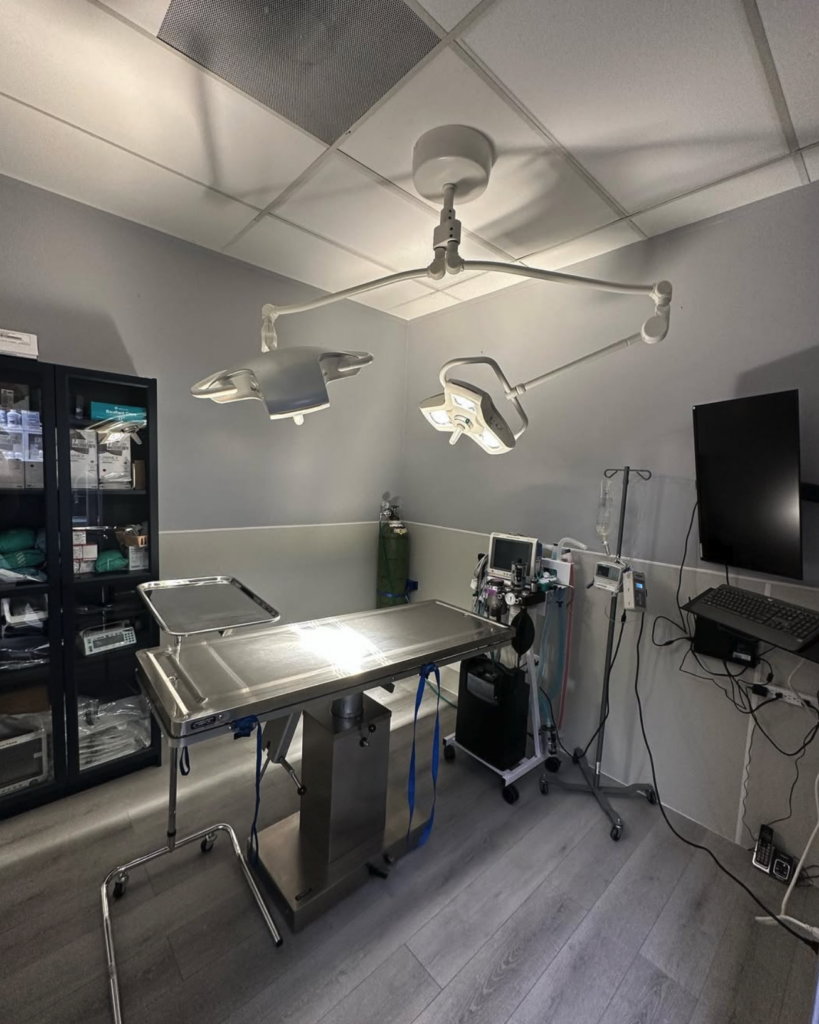
Surgery takes place in a dedicated surgical suite with monitored anesthesia and temperature support. Discuss your pet’s individual anesthesia plan.
How Should I Prepare My Pet?
Request written instructions covering food, water, medications, and arrival time. Follow your veterinary team’s directions for your individual pet.
AAHA’s preparation guidance addresses patient-specific risks and planning. This makes individualized instructions more useful than a general online fasting rule.
Ask what to do if your pet accidentally eats before arrival. Report it rather than deciding whether it matters yourself.
Also clarify which belongings to bring. Confirm whether your pet needs a carrier, leash, or other transport support.
Tell the team about any new symptoms before the procedure. Ask whether changes could affect the planned operation.
How Will You Reduce Fear and Stress?
Tell the team if your pet fears carriers, handling, or unfamiliar places. Ask how they can adapt the visit.
Discuss whether preparation at home or prescribed medication would help. Any medication plan should come directly from the veterinary team.
Fear Free offers separate certification routes for professionals and veterinary practices. Ask which current certification applies when evaluating those credentials.
Gentle handling and separate waiting areas for cats and dogs can support a calmer visit. Discuss your pet’s needs beforehand.
Ask what practical steps will support your pet during admission and recovery. A clear plan matters more than a label alone.
What Is the Plan for Pain Relief?
Ask how pain will be assessed before and after surgery. Also discuss which medicines your pet may receive at home.
AAHA’s pain guidelines support early treatment and combining appropriate methods. They also emphasize assessing pain and reviewing the response to treatment.
Request clear directions for every prescribed medicine. Confirm the dose, timing, and whom to contact about problems.
Ask how your pet might show discomfort. Make sure you understand when the team wants an update.
Before discharge, clarify what to do if giving medication becomes difficult. Having that plan can prevent confusion during recovery.
What Does the Estimate Include?
Request a written estimate before agreeing to the procedure. Ask the team to explain each part.
Clarify whether testing, anesthesia, medication, tissue analysis, and follow-up appointments are included. Ask which charges could change.
Discuss how the team will contact you if unexpected findings require additional treatment. Confirm who can approve changes while you are unavailable.
For veterinary surgery near you, cost discussions should consider the full care plan. An initial price may not explain every likely expense.
Ask about payment arrangements early. This gives you time to understand the options before admission.
What Will Recovery Involve?
Ask when your pet may go home and what determines discharge readiness. Also discuss whether continued hospital care might be needed.
AAHA’s return-home guidance addresses discharge instructions and care after anesthesia. Request directions that match your pet’s procedure.
Before discharge, confirm:
- When to offer food and water.
- Which activities to limit and for how long.
- How to protect and check the incision.
- When to give medication and attend rechecks.
Ask whether you need to adjust your home or daily routine. Discuss stairs, other pets, and periods without supervision.
A written plan helps everyone involved provide consistent care.
Who Should I Contact About Complications?
Ask which changes require a routine call and which need immediate assessment. Request clear examples relevant to the operation.
Save the daytime contact number and an after-hours option. Identify an emergency vet in Encino before you need urgent help.
Encino Pet Hospital & Emergency publishes daily urgent-care hours of 7:30 AM to 7:30 PM. If your pet may need monitoring overnight, ask about the plan before the day of surgery.
Confirm where to go outside those hours. Ask how another hospital can obtain the surgical records.
Bring Your Questions to the Surgical Consultation
Good questions help you understand the procedure and your responsibilities afterward. They also make uncertainty easier to discuss.
Before agreeing to surgery, review the expected benefits, risks, costs, and recovery plan. Ask for clarification whenever something feels unclear.
Bring this question list to your surgical consultation. Request written preparation and discharge instructions tailored to your pet.
Keep reading: Veterinarian Near Me in Encino: Your Full-Service Local Vet
Sources
Encino Pet Hospital & Emergency, 17324 Ventura Blvd, Encino, CA 91316. Open 7 days a week, 7:30 AM to 7:30 PM, including holidays. Call (818) 922-2209. Serving Encino, Sherman Oaks, Tarzana, Woodland Hills, Studio City and the wider San Fernando Valley.
Frequently asked questions
Have questions about your pet’s surgery?
Book a surgical consultation. We will walk through the plan, the estimate and recovery before anything is scheduled.